The Short Version (Key Takeaways)
- Texas requires motorcycle riders to show financial responsibility; TDI lists minimum liability limits of 30/60/25.
- Seasonal riders should ask their insurer about approved storage or lay-up options before changing coverage.
- Do not ride on public roads unless required liability coverage is active and confirmed by the insurer.
- Year-round riders should review liability limits, collision, comprehensive, passenger coverage, and motorcycle accessories.
- Call Rainbow Insurance Agency at 817-922-8031 to review Fort Worth motorcycle coverage.
1. Start with the Texas requirement, then choose protection for your bike
Texas requires motorcycle operators to show financial responsibility for accidents they cause. The Texas Department of Insurance (TDI) says motorcycles are treated like cars for insurance requirements and lists minimum liability limits of $30,000 for bodily injury to one person, $60,000 for bodily injury per accident, and $25,000 for property damage per accident—often written as 30/60/25 (TDI motorcycle insurance guidance). These limits are a legal starting point, not a promise that every loss will be paid in full. If a crash injures several people or damages a costly vehicle, your policy limits may not cover every claim.
Liability coverage is for harm you cause to other people or their property. It generally does not repair your own motorcycle or pay your own medical bills. A motorcycle policy can include additional protections, depending on the insurer and policy form:
- Collision can help pay to repair or replace your motorcycle after it collides with another vehicle or object, subject to the deductible and policy terms.
- Comprehensive can cover certain non-collision losses such as theft, fire, vandalism, hail, or damage from an animal.
- Uninsured/underinsured motorist (UM/UIM) may help when an at-fault driver has no insurance or insufficient insurance, subject to the policy’s terms.
- Medical payments or other injury coverage may help with medical expenses for you or a passenger, depending on the policy.
- Accessories and custom-parts coverage may be needed for upgraded seats, exhausts, luggage, electronics, paint, or other equipment.
Coverage names, limits, exclusions, and availability vary by insurer. TDI’s motorcycle page summarizes the state liability minimums, while insurer materials describe common optional protections; review the actual motorcycle policy and endorsements rather than assuming an auto policy applies to your bike (TDI motorcycle guidance, Progressive Texas motorcycle coverage overview). To compare a dedicated local policy, see Fort Worth motorcycle insurance.
2. Seasonal riders: match the policy to the months you actually ride
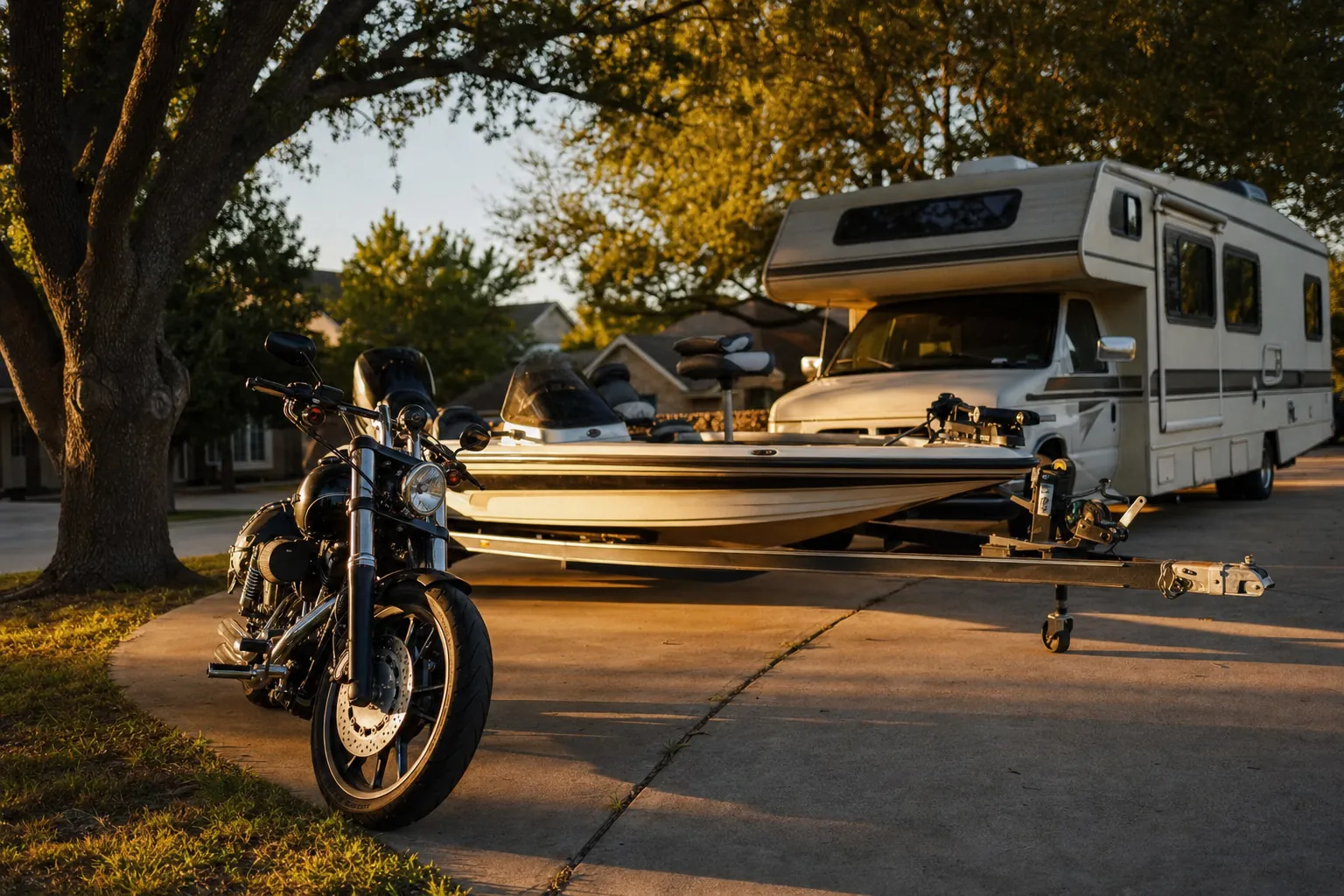
Seasonal riders may use a motorcycle for warm-weather weekend trips, rallies, or occasional scenic rides, then leave it parked for several weeks or months. That lower riding frequency can affect how a carrier evaluates annual mileage and use, but it does not make the bike risk-free while it is stored. A motorcycle can still be stolen from a garage, damaged by a storm, or vandalized while off the road.
Before winter or another planned break, contact your insurer or agent and ask whether the carrier offers a storage or lay-up option for your specific motorcycle and policy. A lay-up arrangement may adjust certain coverages for an agreed storage period, but the details are insurer-specific. Ask exactly which coverage stays active, which coverage changes, what dates apply, and how to restore riding coverage. Do not cancel or reduce coverage based only on a general online description.
The biggest safety rule is simple: do not ride while the policy lacks the liability coverage required for public-road use. If a storage arrangement suspends liability or collision, the motorcycle must remain off public roads until the insurer confirms in writing that the needed coverage is active again. Even a short ride around the block can create an uncovered loss if the policy has not been restored.
Think through storage conditions, too. A locked garage, stable battery maintenance, fuel and tire care, and a secure cover can reduce practical storage concerns, but they are not substitutes for insurance. Comprehensive coverage may be relevant to theft or storm risks if it remains active under the policy. Ask whether a deductible applies to theft or hail and whether accessories are insured at the amounts you expect. TDI notes that policy terms—not assumptions about where a bike is stored—determine the coverage available for a loss (TDI motorcycle insurance guidance).
3. Year-round riders: protect daily use, passengers, and the bike’s value
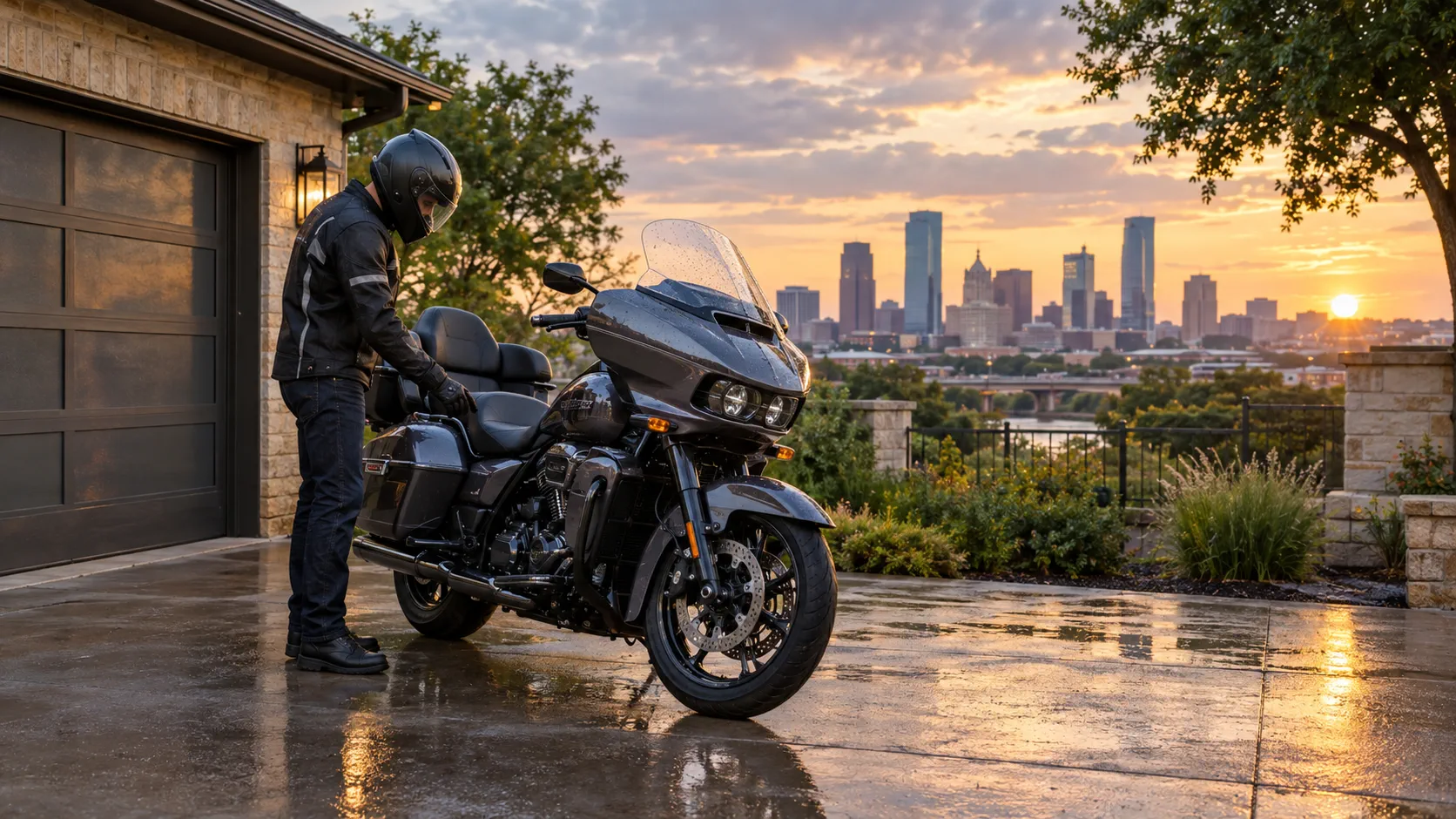
Full-time riders depend on their motorcycle for commuting, errands, or regular trips throughout the year. For them, continuous coverage is often the practical baseline: the motorcycle is exposed to road risks more often, and there is less room to forget a seasonal policy change. You still need to select limits and optional protections that fit your household, bike, and budget.
Start with liability limits. Texas’s 30/60/25 requirement is the minimum identified by TDI, but consider what you could afford if a serious accident exceeded those amounts. The right limit depends on your finances and risk tolerance; a licensed agent can help compare options without treating one limit as right for every rider. If you also own a car, review it separately—motorcycle coverage is its own policy class. You can also compare your Fort Worth auto insurance and motorcycle liability limits together to understand your overall exposure.
Next, consider protection for your own bike. Collision is worth reviewing if a crash repair or replacement would be difficult to pay out of pocket. Comprehensive is useful to discuss when theft, fire, hail, or other non-collision damage would be costly. If the motorcycle is financed or leased, check the lender agreement; insurers note that lenders often require physical-damage coverage while a loan or lease is outstanding (Progressive Texas motorcycle insurance overview).
Regularly carrying a passenger, commuting in traffic, touring far from home, or installing expensive accessories all change the questions to ask. Confirm whether a passenger is covered, whether the policy includes roadside assistance or towing, whether custom parts need a separate limit, and how the insurer values the motorcycle after a total loss. Keep receipts, serial numbers, photos, and service records for the motorcycle and its equipment. If you own a home or have savings and other assets to protect, you may also want to review broader personal liability needs, including Fort Worth umbrella insurance.
4. Compare the trade-offs and complete a Fort Worth policy review
The best choice is not simply “cheap” versus “expensive.” A seasonal rider may want a carrier-approved storage arrangement; a year-round rider needs coverage that stays appropriate for regular road use. Both should compare the same limits and deductibles when requesting quotes, so the price comparison is meaningful.
| Decision point | Seasonal or occasional rider | Year-round or commuting rider |
|---|---|---|
| Road use | Rides during selected months or on occasional days | Uses the motorcycle regularly across the year |
| Liability | Must be active before operating on Texas public roads; ask whether any storage plan changes it | Keep required liability active while riding and confirm limits fit your situation |
| Bike damage | Ask if comprehensive can remain active during approved storage and what losses it covers | Consider both comprehensive and collision if replacing or repairing the bike yourself would be difficult |
| Mileage and use | Give an accurate estimate and update the insurer if riding habits change | Describe commute distance, regular use, and annual mileage accurately |
| Storage or lay-up | Ask the carrier which coverages change, the effective dates, and how to reinstate them | Usually less need for seasonal adjustments; still report any long-term storage or use change |
| Pre-ride checklist | Confirm in writing that road-use coverage is active before the first ride | Check renewal documents, motorcycle details, listed riders, accessories, and deductibles |
| Quote comparison | Compare the same protections for both riding and storage periods | Compare year-round limits, deductibles, and included extras across carriers |
The numbers that matter most are not a generic statewide average. Your quote can reflect the motorcycle’s make, model, year, engine size, where it is kept, your riding history, annual mileage, chosen limits, deductibles, and selected endorsements. Ask an agent to show which items change between a standard year-round quote and any available storage-period option. Make the decision based on your actual policy documents—not a promised percentage of savings.
Whether you ride only in spring and fall or commute most weeks, review your policy at renewal and before changing how you use the bike. For Fort Worth and greater DFW riders, a short checklist can help prevent gaps:
- Verify the required liability coverage. Confirm the policy meets at least Texas’s 30/60/25 financial-responsibility limits and that the motorcycle and all regular riders are correctly listed (TDI motorcycle insurance guidance).
- Match coverage to the motorcycle’s value. Ask how the policy handles a partial loss versus a total loss, whether collision and comprehensive are included, and what deductible applies.
- List equipment and accessories. Tell the agent about permanent upgrades and ask whether they require a separate accessory limit or endorsement.
- Review how and where you ride. Give accurate information about commuting, recreation, annual mileage, passenger use, and where the motorcycle is garaged.
- Ask about storage before changing anything. Get the dates, coverage changes, exclusions, and restoration steps in writing. Do not ride until the insurer confirms the required protections are active.
- Keep proof and records accessible. Store your declarations page, insurance card, claim contacts, motorcycle photos, purchase documents, and accessory receipts where you can retrieve them.
If you also own a home, confirm that your home policy and motorcycle policy are coordinated without assuming one replaces the other. A homeowners contract may have limited coverage for certain personal property or liability situations, but it is not a substitute for motorcycle road-use coverage. See Fort Worth homeowners insurance for help reviewing home-policy questions separately from your motorcycle policy.
Talk with a Fort Worth insurance agent
Seasonal riders need a safe way to manage storage periods without accidentally riding uninsured; full-time riders need coverage that stays aligned with regular road use, the motorcycle’s value, and their finances. Rainbow Insurance Agency can review your bike, riding pattern, liability limits, physical-damage options, and any carrier-approved storage choices. Call 817-922-8031 or visit 2209 8th Ave, Fort Worth, TX 76110. Office hours are Monday, Wednesday, and Friday 9AM–6PM; Tuesday and Thursday 9AM–7PM; Saturday 9AM–2PM; Sunday closed. Ask about Fort Worth motorcycle insurance before changing coverage or heading out for your next ride.
Frequently Asked Questions
Do I need motorcycle insurance if I only ride a few times a year?
If you ride on public roads, Texas requires proof of financial responsibility; TDI lists minimum motorcycle liability limits of 30/60/25. Ask your carrier about the exact policy that fits occasional use, and do not ride unless required coverage is active (TDI motorcycle insurance guidance).
Can I cancel my motorcycle policy during winter storage?
Do not cancel it without first discussing the consequences with your insurer. Canceling may end protection for theft, fire, hail, or other losses, and you must arrange required liability coverage before returning to public roads. Ask whether the carrier offers an approved storage option and get its coverage terms in writing.
Does a lay-up policy mean I can take a quick ride?
Not necessarily. Some storage arrangements may change or suspend road-use coverages during the storage period. Ask the insurer whether liability and collision are active, when changes take effect, and how to reinstate them. Do not ride until the carrier confirms active coverage for road use.
Does my car insurance cover my motorcycle?
Do not assume it does. Motorcycles generally require a dedicated motorcycle policy, and auto insurance is written for a different type of vehicle. Review your policy or ask an agent before riding (Progressive Texas motorcycle insurance overview).
What should I compare when I get motorcycle quotes?
Compare the same liability limits, collision and comprehensive deductibles, accessory coverage, passenger protections, roadside benefits, and storage-period terms. Also confirm the motorcycle details, listed riders, annual mileage, and garaging location are accurate.