The Short Version (Key Takeaways)
- Texas liability minimums are 30/60/25: $30,000 per person, $60,000 per crash for bodily injury, and $25,000 for property damage.
- Liability coverage pays for damage and injuries you cause; it does not repair your own car after an at-fault crash or cover theft, hail, flood, or vandalism.
- “Full coverage” is an informal term usually meaning liability plus collision and comprehensive; it is not one official Texas package.
- Lenders and leasing companies generally require collision and comprehensive while you owe money, and a higher deductible can lower premium but increases your out-of-pocket cost.
- Call Rainbow Insurance Agency at 817-922-8031 to compare Fort Worth auto insurance limits, deductibles, and options.
What Texas requires: liability coverage pays for damage you cause
If you are shopping for car insurance in Fort Worth, the biggest decision is often not which company to choose—it is whether liability-only coverage is enough or whether you should pay for the broader protection people commonly call “full coverage.” Texas requires drivers to be able to pay for accidents they cause, but the legal minimum does not repair your own vehicle. Collision and comprehensive coverage can help protect the car you rely on for work, school, and family life. The right choice depends on your car’s value, loan or lease, driving habits, savings, and comfort with risk. This guide explains the difference between liability-only and broader auto insurance in Texas in 2026, what “full coverage” does and does not mean, and how Fort Worth drivers can compare limits and deductibles. The Texas Department of Insurance auto insurance guide is the state’s consumer reference for the coverage types and minimum limits discussed here.
Texas law requires drivers to show they can pay for accidents they cause. Most people satisfy that requirement by buying auto liability insurance. The state minimum is commonly written as 30/60/25:
- $30,000 for bodily injury or death of one person in a crash.
- $60,000 for bodily injury or death of two or more people in one crash.
- $25,000 for damage to someone else’s property in one crash.
The Texas Department of Insurance explains that liability coverage can pay for the other driver’s vehicle, other damaged property, and medical expenses when you are at fault. It does not pay to repair your own car after an at-fault collision, and it does not cover theft, hail, flood, or vandalism to your vehicle.
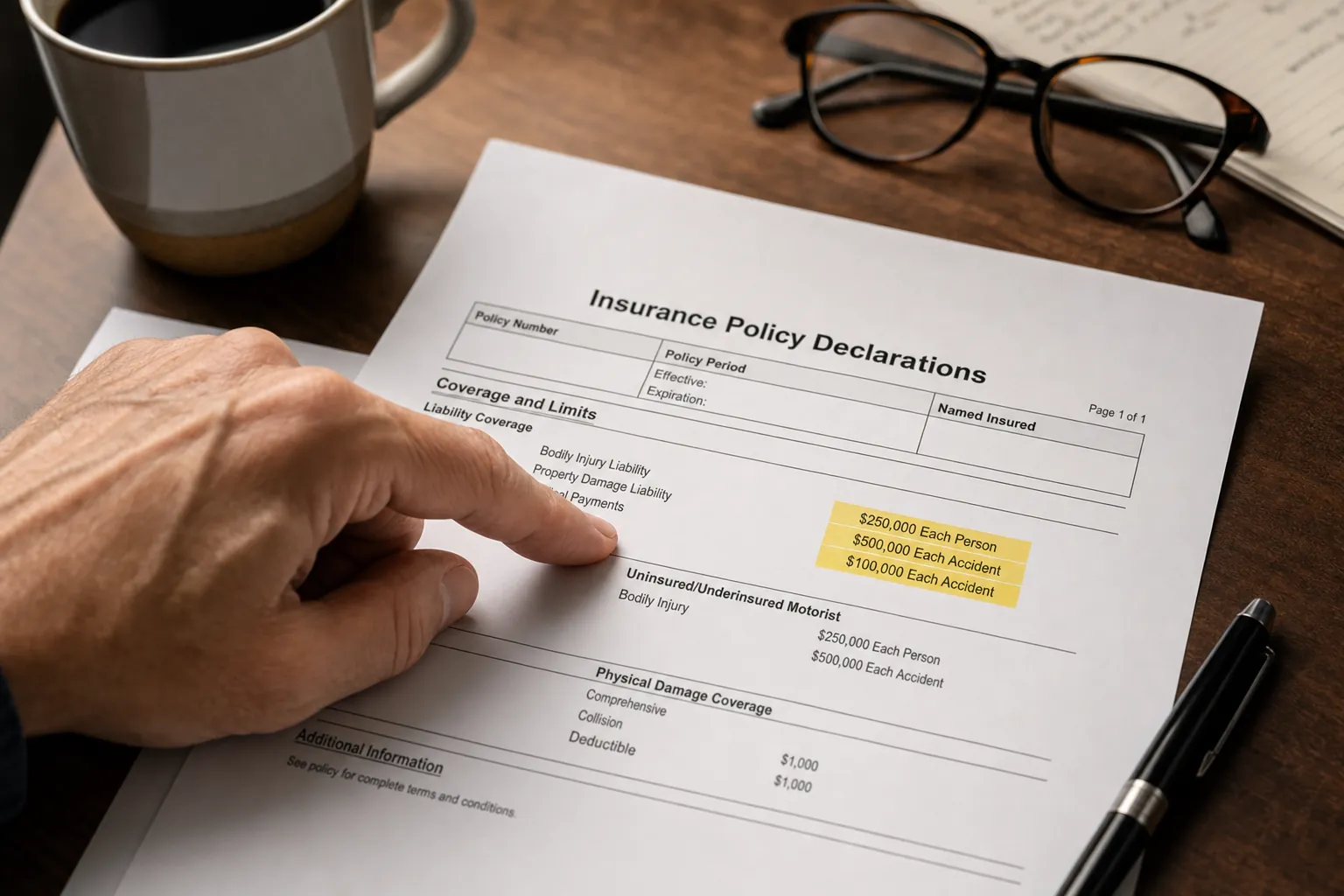
“Liability-only” usually means a policy with liability coverage and any other coverages you choose—such as personal injury protection or uninsured/underinsured motorist coverage—but without physical-damage coverage for your own car. It is not a special Texas policy form. Ask for the actual declarations page so you can see which coverages and limits are included.
The minimum limits are legal minimums, not a recommendation for every household. A serious crash can exceed $30,000 in medical bills quickly, and $25,000 may not replace a newer SUV or pickup. If your policy limits are exhausted, you may have to pay the rest yourself and could face a lawsuit. Many drivers compare higher liability limits before adding optional physical-damage coverage.
What people mean by “full coverage”
Texas does not define one official “full coverage” package. In everyday insurance conversations, the phrase usually means liability plus collision and comprehensive coverage. It may also include uninsured/underinsured motorist coverage, personal injury protection, rental reimbursement, towing, or other options—but those coverages are separate decisions. Never assume a quote labeled “full coverage” includes everything you need.
Collision coverage can pay to repair or replace your car after a covered collision, subject to your deductible and policy terms. Examples include hitting another vehicle, a guardrail, or an object. Comprehensive coverage, sometimes called “other than collision,” can pay for covered losses such as theft, fire, flood, hail, vandalism, falling objects, or hitting an animal. These coverages protect your vehicle; they do not replace liability insurance.
If you finance or lease your car, the lender or leasing company will generally require collision and comprehensive coverage. TDI says that if you cancel those coverages while you still owe money, the lender can buy single-interest coverage and add the cost to your loan payment. That lender-purchased protection is usually expensive and protects the lender—not your full financial interest in the vehicle.
Collision and comprehensive each have a deductible. A $1,000 deductible can lower the premium compared with a $250 deductible, but you need to be able to pay the deductible after a loss. Ask whether the policy uses separate deductibles for collision and comprehensive and whether special hail or glass terms apply.
Liability-only vs. broader coverage: a practical comparison
The best choice is the one that matches what you could afford to lose. Use this table as a starting point, then compare the actual policy wording and quote.
| Question | Liability-only | Liability plus collision and comprehensive |
|---|---|---|
| Pays for injuries and property damage you cause | Yes, up to your liability limits | Yes, up to your liability limits |
| Repairs your own car after an at-fault crash | No | Collision may pay, minus your deductible |
| Covers theft, hail, flood, fire, and vandalism | No | Comprehensive may pay, minus your deductible |
| Usually required by a lender or lease | No, not by itself | Yes, when required by the lienholder or lessor |
| Monthly premium | Usually lower | Usually higher |
| Your financial exposure after damage to your car | You pay for repairs or replacement | You pay the deductible and any excluded or uncovered amount |
| Good fit to consider | Older, lower-value car; owner can self-insure damage | Newer or financed vehicle; car is difficult to replace |
A policy can be broader than this table in some areas and narrower in others. For example, a liability-only policy may still include PIP and uninsured/underinsured motorist coverage, while a broader policy may have a high deductible or exclude a business use. Compare limits, deductibles, exclusions, and endorsements—not just the label.
How to decide what you actually need in Fort Worth
Start with the car’s value and your ability to replace it. If your vehicle is worth only a few thousand dollars, a high collision deductible may leave relatively little potential benefit after a total loss. That does not automatically make liability-only correct: consider repair costs, parts availability, and whether you could buy another dependable car tomorrow. Ask your agent to compare the premium difference with the vehicle’s current value.
Check for a loan or lease. Read the finance or lease agreement. If a bank or leasing company requires physical-damage coverage, liability-only may violate the contract even if it satisfies Texas’s legal requirement. Tell your agent the lender’s name and required deductible so the policy can be issued correctly.
Consider Fort Worth weather and driving conditions. North Texas drivers may face hail, flash flooding, fallen branches, theft, animal strikes, and crowded highways. Comprehensive coverage is the part of the policy that can address many noncollision losses, while collision addresses covered impact damage. Neither coverage prevents a loss, and both are subject to exclusions, deductibles, and claim rules.
Protect against drivers with too little insurance. Texas requires liability insurance, but not every driver carries enough. Uninsured/underinsured motorist coverage can help when another driver has no insurance, not enough insurance, or leaves the scene, subject to policy terms and a deductible. TDI says insurers must offer this coverage, and you must reject it in writing if you do not want it. Ask whether the limits match your liability limits and how a hit-and-run claim must be reported.
Think about medical bills and lost wages. Personal injury protection, or PIP, can pay medical bills, lost wages, and certain other costs for you and your passengers. TDI says Texas auto policies include PIP unless you reject it in writing. PIP has policy limits, so ask what limit is on your declarations page. Medical payments coverage is another option that may help with medical bills, but it is not the same as PIP.
Review how you use the vehicle. Personal auto coverage may not cover every business use, food delivery, rideshare trip, or regular use of a company-owned vehicle. If you drive for Uber or Lyft, read Rainbow’s Fort Worth rideshare insurance information and ask about the gaps between personal coverage and a platform’s coverage. If the car is used for deliveries or a contracting business, compare Fort Worth commercial auto insurance instead of assuming a personal policy is enough.
Consider how often you travel across the border. A Texas auto policy generally does not replace the Mexican liability policy required for driving in Mexico. Drivers who take trips south of the border should review Rainbow’s Fort Worth Mexico auto insurance page before leaving. Ask about the destination, trip dates, vehicle ownership, and legal requirements.
How to lower the cost without creating a coverage gap
Start with the same liability limits and deductibles when comparing quotes. A cheaper premium may simply have lower limits, a higher deductible, no rental reimbursement, or fewer protections for an uninsured driver. TDI recommends shopping around and considering the policy that best meets your needs and budget; its auto insurance resources also point consumers to HelpInsure and other shopping guidance.
Ask about discounts for safe driving, multiple vehicles, bundling, defensive-driving courses, anti-theft devices, mileage, and automatic payments when available. Usage-based or telematics programs may price part of the policy using driving information; ask what data is collected, how it affects renewal, and whether participation is optional.
You can also adjust the deductible if you have enough savings to cover it. Before removing collision or comprehensive, compare the annual savings with the amount you would have to pay after a total loss. If you still owe more than your car is worth, ask whether gap coverage is available through the lender or insurer; gap coverage is separate from collision and comprehensive and does not cover every situation.
Review the policy after moving, adding a driver, changing jobs, replacing a vehicle, paying off a loan, or beginning delivery or rideshare work. Keeping the wrong policy because “it has always been fine” can be more expensive than a careful annual review.
A simple checklist before you choose
Before binding liability-only or broader coverage, ask:
1. What are my liability limits, and are they higher than the Texas minimum? 2. Do I have collision and comprehensive, and what are the separate deductibles? 3. Is a lender or leasing company listed correctly, and what limits does it require? 4. Do I have PIP and uninsured/underinsured motorist coverage, and what happens if I reject either one? 5. Is rental reimbursement important because I cannot be without a car? 6. Does the policy cover my actual use, including commuting, work equipment, delivery, or rideshare? 7. What exclusions apply to hail, flood, glass, custom equipment, or borrowed vehicles? 8. If the car is totaled, how will the insurer determine its value, and could I replace it?
Rainbow Insurance Agency can compare Fort Worth car insurance options across carriers and help you review limits, deductibles, and optional coverages. We serve Fort Worth and DFW from 2209 8th Ave, Fort Worth, TX 76110. Office hours are Monday, Wednesday, and Friday 9AM–6PM; Tuesday and Thursday 9AM–7PM; Saturday 9AM–2PM; closed Sunday.
Recommended Related Resources & Local Guides
Frequently Asked Questions
Is liability-only car insurance legal in Texas?
It can satisfy Texas’s financial-responsibility requirement if the policy meets at least the state’s 30/60/25 liability limits and remains active. Liability-only does not pay to repair your own vehicle, and a lender or lease may require collision and comprehensive coverage even when Texas law does not require those coverages.
Does “full coverage” include uninsured motorist coverage and PIP?
Not automatically. “Full coverage” is an informal phrase usually referring to liability, collision, and comprehensive. PIP and uninsured/underinsured motorist coverage are separate coverages with their own limits, deductibles, and written-rejection rules. Look at the declarations page rather than relying on the phrase.
Should I carry full coverage on an older car?
It depends on the car’s value, premium, deductible, loan status, repair costs, and your ability to replace it. Compare the annual cost of collision and comprehensive with the amount the insurer might pay after a covered loss. Keep in mind that comprehensive can cover hail, theft, and other losses even when collision no longer feels worthwhile.
What happens if I drop collision and comprehensive while I still owe money?
The lender may purchase single-interest coverage and add the premium to your loan payment. That coverage generally protects the lender, not your full financial interest in the car. Contact the lender and your agent before changing coverage.
Can liability-only insurance cover a hit-and-run?
Ordinary liability coverage pays for damage you cause to other people; it does not repair your own car. Uninsured/underinsured motorist coverage may help with a hit-and-run claim if you bought it and follow the policy’s reporting requirements. TDI says you must report the accident to police for uninsured-motorist coverage to pay for a hit-and-run loss.
What is the phone number for Rainbow Insurance Agency?
Call 817-922-8031 to compare Fort Worth auto insurance options. Rainbow Insurance Agency is at 2209 8th Ave, Fort Worth, TX 76110, and can help you review liability limits, collision and comprehensive deductibles, PIP, uninsured/underinsured motorist coverage, and vehicle-use questions. The right policy is not necessarily the policy with the lowest premium. It is the coverage you can keep active and rely on when a crash, hailstorm, theft, or uninsured driver creates a bill. Call Rainbow Insurance Agency at 817-922-8031 for a comparison before you choose liability-only or broader coverage.