The Short Version (Key Takeaways)
- Document the roof, exterior, interior, and damaged belongings from the ground before making permanent repairs.
- Report damage promptly and follow the claim deadline in your policy; TDI says some policies use a one-year deadline.
- Make only temporary repairs to prevent further damage, keep receipts, and wait for inspection before permanent work.
- Check the wind-and-hail deductible and whether roof coverage is replacement cost or actual cash value.
- Call Rainbow Insurance Agency at 817-922-8031 to review Fort Worth homeowners and hail coverage.
1. Start with safety and a same-day damage record
A North Texas hailstorm can leave you with bruised shingles, broken screens, dented gutters, water stains, and a long list of questions about what to do next. For Fort Worth and DFW homeowners, the best first move is not signing a roofing contract or guessing whether the damage is covered. It is documenting the condition, protecting the home from further damage, and reviewing the policy’s storm, roof, deductible, and claim requirements. Texas Department of Insurance (TDI) guidance says most home policies cover windstorm and hail away from the Gulf Coast, but coverage varies by policy and company (TDI home insurance guide). This checklist explains how to prepare a hail claim, what mistakes can create problems, and when to call your agent at Rainbow Insurance Agency.
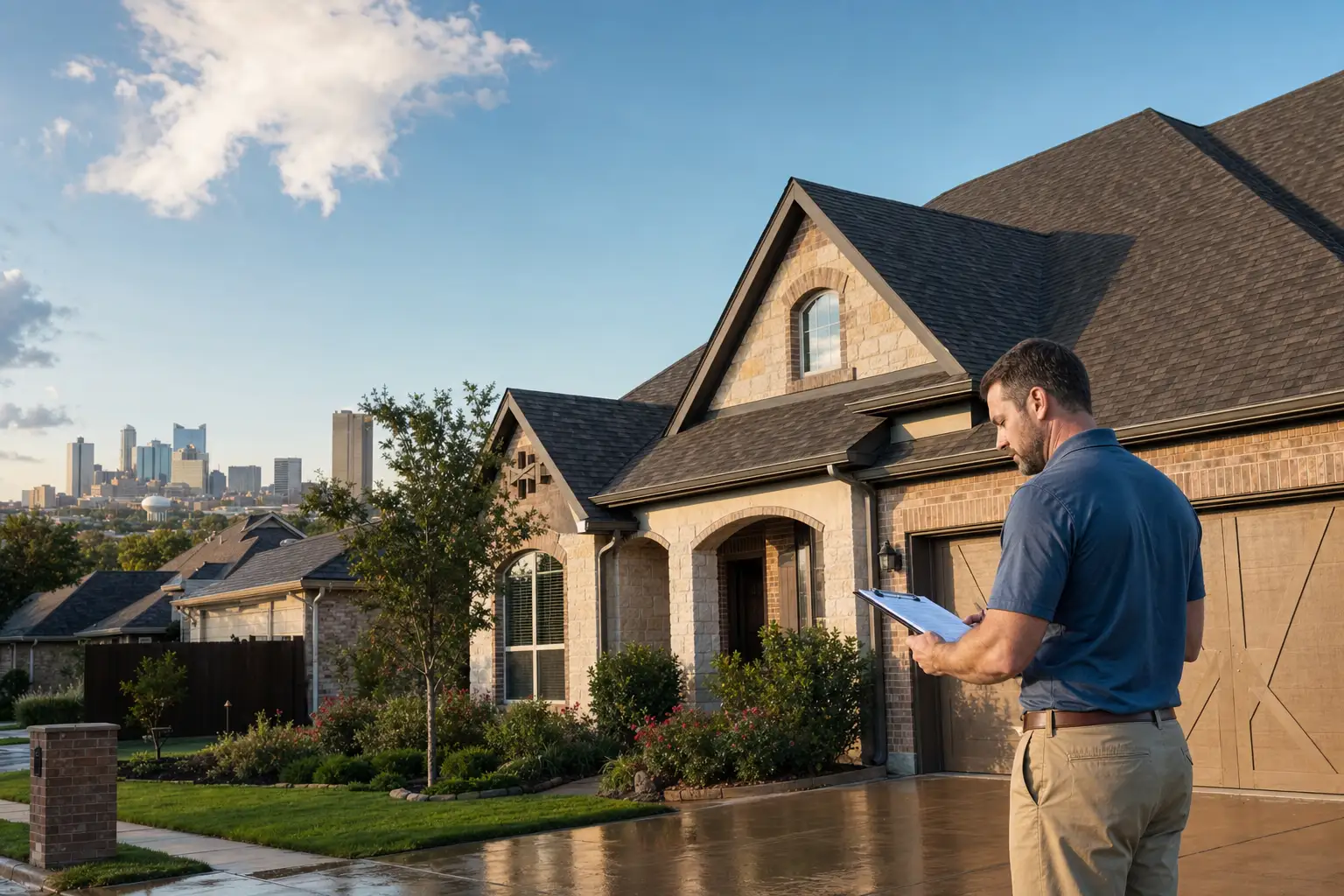
Do not climb onto a wet or damaged roof after a storm. From the ground, photograph the roof, gutters, siding, windows, fences, detached structures, vehicles, and any visible debris. Take wide photographs that establish the location, then close-ups that show the damage. Photograph each room with water stains or ceiling damage, along with damaged contents such as furniture, electronics, clothing, and appliances.
Write down the storm date, approximate time, wind or hail observations, when you first noticed damage, and whether anyone was home. Save local weather alerts or a reputable storm report if you have one, but do not treat a weather report as proof that your particular roof was damaged. An adjuster will evaluate the actual condition and the policy’s covered cause of loss.
Make a room-by-room inventory. Include the item, approximate age, brand or model, purchase price if known, current condition, and estimated replacement cost. Do not overlook smaller items; TDI’s home insurance guide specifically recommends listing items such as kitchen utensils and bathroom accessories when preparing a claim (TDI home insurance guide). If you have older photographs of the home or roof, keep them with the new storm photos so you can show the pre-loss condition.
Notify your insurer or agent as soon as you know there may be damage. TDI says most companies set their own claim deadlines and that some policies require a claim within one year unless there is good cause for delay (TDI home insurance guide). That is not permission to wait a year: your policy may require earlier notice, and a prompt report helps preserve evidence while the damage is visible. Ask for a claim number, the name and contact information of the assigned adjuster, and a written explanation of any documents the company needs.
2. Protect the house without making permanent repairs
After a hailstorm, take reasonable temporary steps to prevent additional damage. A qualified professional may tarp a roof, board a broken window, cover exposed openings, move undamaged belongings away from a leak, or place a container under active dripping. TDI advises homeowners to make temporary repairs to protect the house and belongings, keep receipts, and avoid permanent repairs before the company has inspected the damage (TDI home insurance guide).
Keep every receipt for tarps, emergency labor, boarding, water extraction, materials, hotel rooms, meals, or other extra costs. Ask the insurer before authorizing non-emergency work, and get written approval when possible. Take photographs before and after the temporary repair. Preserve damaged materials if it is safe and practical, and do not discard a damaged item until the adjuster tells you it is no longer needed.
Do not let a door-to-door roofer persuade you to sign an assignment of benefits, a broad contract, or a document saying the roofer can negotiate your entire claim before you have read it. Do not let anyone pressure you to exaggerate damage, file a claim for an unrelated problem, or replace a roof solely because it is old. TDI’s April 2026 roof guidance says an insurer may pay for storm damage, but it will not pay for a new roof just because the roof is old or worn out (TDI insurance and your roof).
3. Confirm what the policy actually covers
Hail coverage is not identical on every Texas homeowners policy. Read the declarations page and endorsements, or ask your agent to explain them before you authorize a major repair. Look for the dwelling limit, other-structures limit, personal-property limit, loss-of-use or additional-living-expense limit, and separate deductibles for wind and hail. TDI says a wind-and-hail deductible may be different from the deductible for other losses, which can increase your out-of-pocket cost after a storm (TDI insurance and your roof).
Roof valuation is especially important. Replacement-cost coverage generally pays the cost to repair or replace covered damage at current prices, subject to the deductible, limits, exclusions, and policy conditions. Actual-cash-value (ACV) coverage subtracts depreciation for age and wear, so an older roof can produce a smaller payment. TDI says some Texas insurers change older roofs from replacement-cost coverage to ACV coverage and that a roof in poor condition might not be covered at all; the insurer should tell you when coverage changes (TDI insurance and your roof).
With replacement-cost coverage, the first claim payment may be less than the final repair cost. TDI’s home insurance guide explains that many insurers initially pay the estimated repair cost minus depreciation and the deductible, then release recoverable depreciation after receiving proof that repairs were completed (TDI home insurance guide). Ask how long you have to complete repairs, what invoices or photographs are required, and whether the policy pays for matching materials or only the directly damaged area.
| Policy or claim detail | Why it matters after DFW hail | What to ask your agent or adjuster |
|---|---|---|
| Wind-and-hail deductible | It may be separate from the all-other-perils deductible and may be a percentage or a flat amount. | What deductible applies, and how many dollars will I pay? |
| Replacement cost vs. ACV | ACV subtracts age and wear; replacement cost may release depreciation after repairs. | Is the roof paid at replacement cost, ACV, or a limited schedule? |
| Roof endorsement or exclusion | An endorsement may limit causes of loss, materials, age, or payment. | Which roof wording and endorsements are on my declarations page? |
| Dwelling and other-structures limits | A roof, fence, shed, and detached garage may use different coverage limits. | Are the home, fence, shed, and garage insured to adequate limits? |
| Additional living expenses | If the home is temporarily uninhabitable, hotel, food, and similar extra costs may be covered within a limit. | What is the loss-of-use limit, and which receipts are required? |
| Claim deadline | The policy controls; TDI says some policies use a one-year deadline. | What is my written notice deadline? |
If hail entered through a damaged roof and caused interior water damage, report both the roof and interior damage. TDI lists roof damage, rain entering through a storm-damaged roof, fences, other structures, spoiled food from a storm-related power outage, and additional living expenses among losses a homeowners policy may cover, depending on the policy (TDI storm-damage guidance). Flooding is different: water that rises from the ground generally requires flood coverage, so ask a flood insurer about a separate claim when appropriate. Compare your broader Fort Worth homeowners insurance options before the next storm, not while water is entering the house.
4. Work effectively with the adjuster and contractor
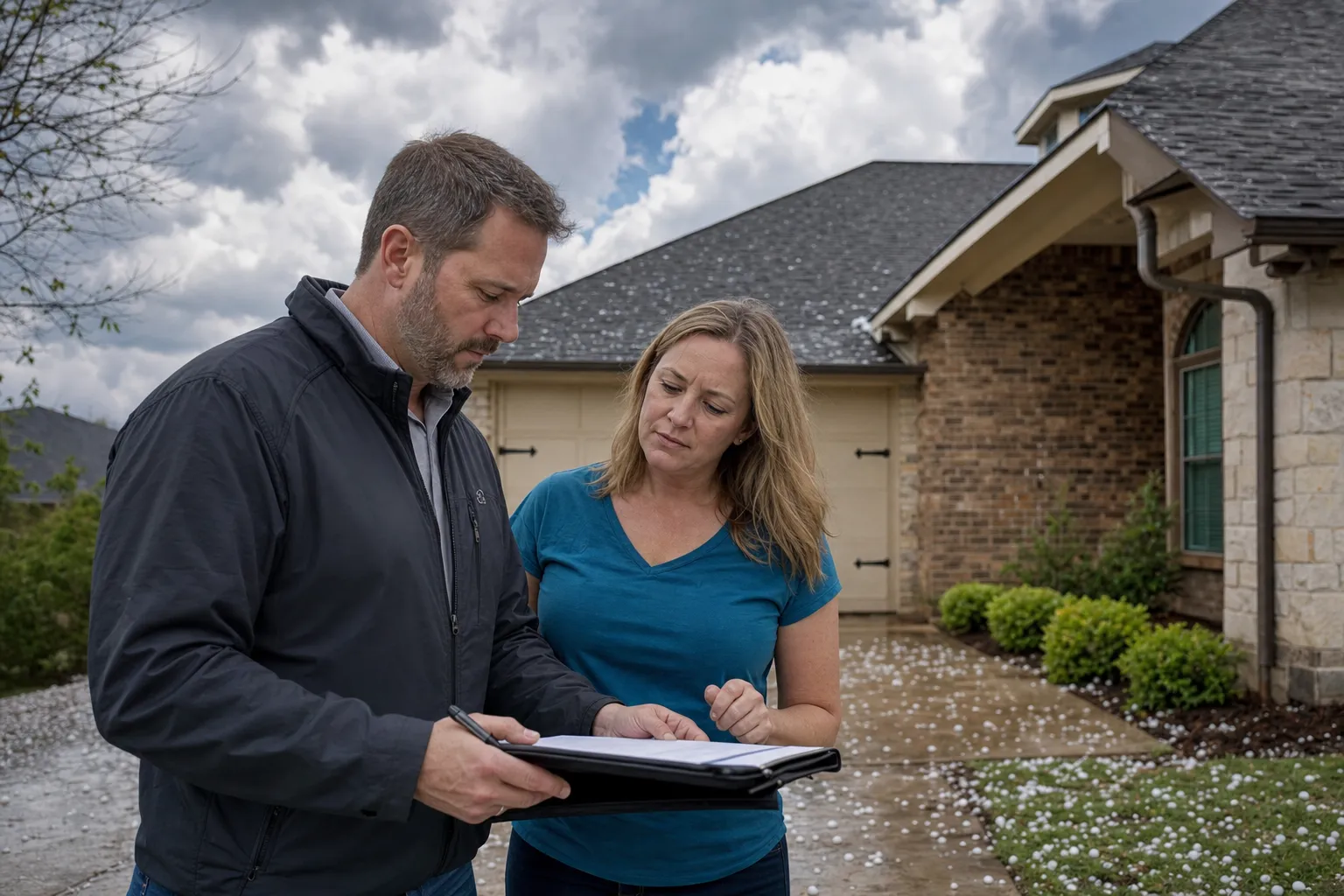
The insurance adjuster evaluates the damage and prepares or reviews an estimate for the company. Try to be present during the inspection. TDI recommends having your contractor present so the contractor can discuss estimates and repair issues with the adjuster (TDI home insurance guide). Ask the adjuster to inspect the roof, flashing, vents, gutters, windows, siding, screens, fences, detached structures, attic, ceilings, insulation, and personal property when relevant.
Before hiring a roofer, verify the company’s identity, physical address, references, insurance, written scope of work, warranty terms, payment schedule, and cancellation rights. Get more than one estimate when practical, but remember that a contractor’s estimate does not decide whether the policy covers the loss. The policy and the insurer’s claim investigation determine coverage; the contractor estimates the work.
Never sign a contract that says the contractor will “waive” your deductible. A deductible is your share of a covered loss. A suspiciously low estimate can leave out code-required work, flashing, ventilation, gutters, interior repairs, or proper disposal. Ask for a line-item estimate that identifies materials, labor, permits, overhead, and items not included.
If the adjuster’s estimate misses visible damage, send photographs and a written supplement request. Identify the room, elevation, or roof section; explain why the item is storm-related; and attach the contractor’s estimate or inspection report. Keep communication in writing and save every estimate, email, text message, receipt, and payment record in one storm folder.
5. Avoid the most common DFW hail-claim mistakes
Waiting to report the loss. A delay can make it harder to distinguish new hail damage from wear, an older leak, or an unrepaired prior loss. Report promptly and follow the notice deadline in your policy.
Making a permanent repair before inspection. Emergency mitigation is different from replacing the roof. Photograph the condition, keep removed materials when safe, and ask the insurer how to proceed.
Assuming every roof dent is covered. Hail damage must be evaluated under the policy’s covered causes, exclusions, roof condition, endorsements, and deductible. An old or worn roof is not automatically a covered loss.
Comparing the check with the full estimate. The initial payment may subtract the deductible and depreciation. Ask whether a second payment is available after repair and what proof is required.
Allowing a stranger to control the claim. Be cautious with high-pressure door-to-door sales, blank contracts, promises of a “free roof,” and requests for your claim payment before work is complete.
Ignoring water and mold after the storm. Take reasonable steps to stop further water intrusion and notify the insurer if moisture, staining, or mold appears. A delayed report can make the cause and extent harder to establish.
Forgetting the next policy review. After a claim, verify the roof age, material, condition, deductible, dwelling limit, and endorsements at renewal. TDI’s roof guidance recommends asking whether a newer roof or impact-resistant materials qualify for a discount and whether the carrier has changed roof coverage (TDI insurance and your roof). If your property is a rental, review Fort Worth landlord insurance rather than assuming a homeowners policy is the right form. If your assets or liability exposure are substantial, ask about Fort Worth umbrella insurance.
Call Rainbow Insurance before the next storm
The strongest hail-claim preparation happens before the clouds build: know your wind-and-hail deductible, confirm whether the roof is replacement cost or ACV, keep roof records, and make sure dwelling and other-structures limits reflect current rebuilding costs. After a storm, document first, mitigate safely, report promptly, and do not let a contractor rush you into a contract you do not understand. Call Rainbow Insurance Agency at 817-922-8031 to compare coverage and review your policy with a Fort Worth insurance professional. Visit 2209 8th Ave, Fort Worth, TX 76110 during regular office hours for help protecting your home in 2026.
Frequently Asked Questions
How soon should I file a hail damage claim in Texas?
Notify your insurer or agent as soon as possible. The policy sets the deadline, and TDI says some policies use a one-year deadline unless there is good cause for delay. Do not rely on a general deadline; ask for the exact notice requirement in your policy and keep proof of when you reported the loss (TDI home insurance guide).
Can I repair my roof before the insurance adjuster arrives?
Make only temporary repairs needed to protect the home and belongings, such as a tarp or boarding a broken window. Photograph the damage, save receipts, and avoid permanent repairs until the insurer has inspected the property or given written direction. TDI warns that permanent repairs before inspection can create claim problems (TDI home insurance guide).
Does homeowners insurance pay for a roof that is old?
Not simply because it is old or worn out. A covered hail or wind loss may be eligible for payment, but the policy’s roof valuation, condition, deductible, exclusions, and endorsements control. TDI says insurers may use ACV for older roofs or decline to cover a roof in poor condition (TDI insurance and your roof).
What if the adjuster’s estimate is lower than my contractor’s estimate?
Ask the adjuster for the written estimate and compare it line by line with the contractor’s scope. Send photographs, measurements, invoices, and a written supplement request for missed or underpriced work. If the disagreement is about the amount of a covered loss, your policy may contain an appraisal process; TDI explains that appraisal addresses the amount of damage, not whether the policy covers the loss (TDI home insurance guide).
Does hail damage include my fence, shed, or spoiled food?
It may, depending on the policy and the cause of loss. TDI identifies fences, other structures, and food spoiled by a storm-related power outage as examples of losses a homeowners policy may cover, subject to policy terms and limits (TDI storm-damage guidance). Photograph each item and include it in the claim inventory rather than assuming it is included automatically.
Where can I get help reviewing my hail coverage in Fort Worth?
Rainbow Insurance Agency can review your deductibles, roof valuation, dwelling limit, endorsements, and related coverage. Call 817-922-8031 or visit 2209 8th Ave, Fort Worth, TX 76110. Office hours are Monday, Wednesday, and Friday 9AM–6PM; Tuesday and Thursday 9AM–7PM; Saturday 9AM–2PM; Sunday closed. Ask about Fort Worth hail-damage insurance and Fort Worth homeowners insurance before the next DFW storm.