The Short Version (Key Takeaways)
- Roof age is one underwriting factor; carriers may also review material, condition, installation quality, repairs, claims, and storm exposure.
- Texas has no single roof-age cutoff for every insurer, but an older or poorly maintained roof may receive limited coverage, require inspection, or be declined.
- Replacement-cost coverage and actual-cash-value coverage can produce very different claim payments after depreciation and deductibles.
- TDI says insurers may change older roofs to actual cash value, and homeowners should verify roof information and coverage at renewal.
- Call Rainbow Insurance Agency at 817-922-8031 to compare Fort Worth homeowners insurance options.
Why roof age matters to Fort Worth insurance carriers
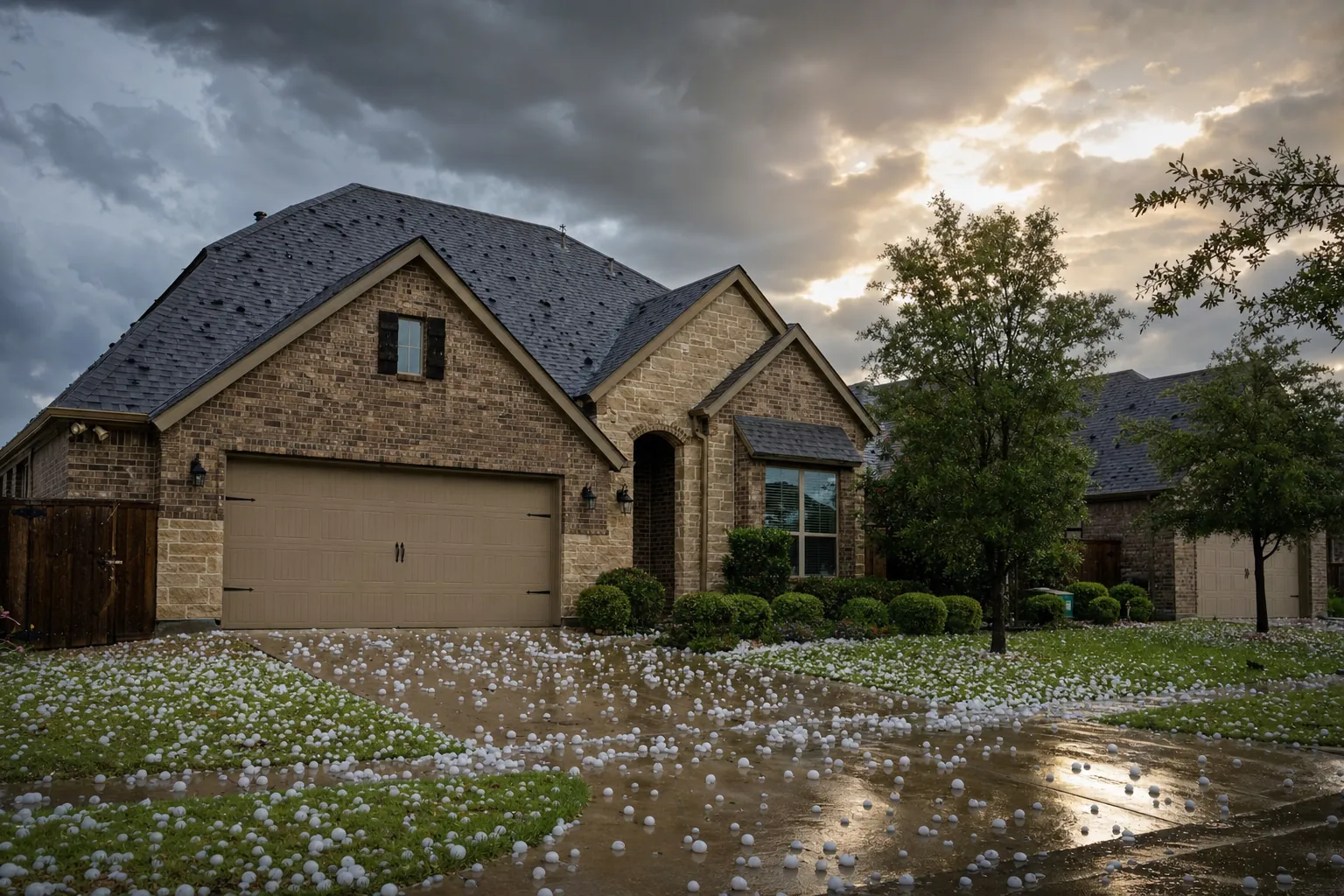
A Fort Worth roof does more than keep rain out. Its installation date, material, condition, repair history, and ability to withstand DFW wind and hail can affect whether a carrier offers homeowners insurance, how much you pay, and what the policy will pay after a covered loss. In 2026, homeowners should read the roof language on the declarations page instead of assuming that “homeowners insurance” automatically means a new roof after every storm. The Texas Department of Insurance (TDI) says some insurers move older roofs from replacement-cost coverage to actual-cash-value coverage, and a company may not cover a roof that is in poor condition (TDI: Insurance and your roof).
Roof age is a shorthand for several underwriting questions: How much useful life may be left? Has the roof already endured years of Texas sun, hail, wind, and temperature swings? Was it installed correctly? Are there unrepaired problems that could turn a small storm loss into interior water damage? A carrier may ask for the roof’s year of installation, material, slope, number of layers, recent repairs, and photographs or an inspection before quoting or renewing coverage.
There is no single Texas-wide “automatic denial” age for every roof. Insurers file their own underwriting rules and can evaluate the roof together with the home’s location, construction, prior claims, occupancy, electrical and plumbing systems, and the coverage requested. TDI’s 2026 guidance is more useful than a blanket age rule: verify the roof information on your policy, expect coverage to change as a roof ages, and understand that insurers may stop covering a roof in poor condition (TDI: Insurance and your roof).
That means two homes with 15-year-old roofs may receive different decisions. One could have a well-documented architectural-shingle replacement, clean inspection photos, and no visible damage. The other could have curling shingles, multiple patch jobs, soft decking, or an unknown installation date. The first homeowner may qualify for more options, while the second may be asked to repair or replace the roof before a carrier will offer broader coverage.
What carriers actually check during a roof review
When a carrier or agent asks about your roof, gather facts rather than guessing. The most common checkpoints include:
- Installation date: The year the current roof was installed, not necessarily the year the house was built. If you bought the home recently, request invoices, permits, a seller disclosure, or a roofer’s written estimate of age.
- Material and design: Asphalt shingles, metal, tile, slate, and other materials have different durability and underwriting characteristics. The carrier may ask about the shingle grade, impact resistance, and whether the roof has one or multiple layers.
- Visible condition: Missing, cracked, curling, lifted, blistered, or deteriorated shingles can raise concerns. So can exposed underlayment, damaged flashing, sagging areas, algae or moss, and evidence of leaks.
- Workmanship and repairs: A recent replacement is not automatically a good replacement. Keep the contractor’s contract, permit, warranty, completion photos, and receipts. Improper installation or repeated temporary repairs may be treated differently from a professionally completed roof.
- Storm history: DFW homeowners should document prior hail or wind damage and show that repairs were completed. An unrepaired prior loss can affect eligibility and a later claim.
- Inspection evidence: Some carriers may request exterior photos, a roof inspection, or a four-point-style inspection. Ask who may perform it, what it must include, and how long the report remains valid.
TDI advises homeowners to check that the age and material listed on the policy are correct and to tell the insurer when a roof is replaced so the age can be updated. Accurate information can also affect a newer-roof discount (TDI: What to know about insurance and your roof). Do not report an estimated roof year as a confirmed installation date; explain what documentation you have and ask what the carrier accepts.
Replacement cost vs. actual cash value for an older roof
The most important roof question may not be “Will the company insure my house?” It may be “How will the policy value the roof if hail or wind damages it?” Replacement-cost coverage generally pays the cost to repair or replace with like kind and quality, subject to the policy limit, deductible, and claim conditions. Actual-cash-value (ACV) coverage subtracts depreciation for age and condition.
TDI’s example makes the difference concrete. If a comparable new roof costs $10,000 and the deductible is $4,000, a replacement-cost policy could pay $6,000 after the deductible. Under an ACV approach, a 5-year-old roof might be valued at $8,500 before the deductible, a 10-year-old roof at $7,000, and a 20-year-old roof at $4,000—leaving no payment after a $4,000 deductible in that example (TDI: Replacement cost or actual cash value). Actual figures depend on the policy, roof, depreciation schedule, loss, and deductible.
| Roof-policy detail | What it can mean for a Fort Worth homeowner | What to verify |
|---|---|---|
| Replacement cost on the roof | The covered repair or replacement is valued at current cost, subject to limits, deductible, and policy conditions | Whether the insurer pays ACV first and releases recoverable depreciation after repairs |
| ACV roof endorsement | Depreciation based on age and condition reduces the claim payment | The depreciation schedule, maximum depreciation, and wind/hail treatment |
| Wind/hail deductible | You may owe a separate or higher deductible after a covered storm | Whether it is a flat dollar amount or a percentage of Coverage A |
| Roof exclusion or limited roof coverage | Some roof damage may be excluded or covered only for named causes or at ACV | The endorsement, exclusions, and notice language on the declarations page |
| New-roof discount | A newer or impact-resistant roof may qualify for a credit | Required age, material, documentation, and whether the discount was applied |
An older roof can therefore remain insured while carrying less generous roof coverage. TDI says insurers should tell policyholders when coverage changes at renewal, so compare the new declarations page with the prior one rather than filing it unread (TDI: What to look for at renewal).
Roof age, Texas weather, and the claim question
A homeowners policy is designed for sudden, covered damage—not ordinary aging. TDI warns that an insurer will not pay for a new roof simply because it is old or worn out (TDI: Insurance and your roof). A roof that has reached the end of its useful life can leak without a covered storm, and deferred maintenance may limit or exclude the resulting damage.
That does not mean an older roof cannot suffer a covered hail or wind loss. It means the adjuster will look at the cause and extent of damage, the roof’s pre-loss condition, applicable exclusions, the deductible, and the valuation method. Photograph the roof and exterior after a severe storm from safe ground; preserve repair invoices and prior inspection reports; and notify your agent or carrier promptly if you see damage. Do not allow an unlicensed contractor to make emergency changes before the condition is documented, except for reasonable steps to prevent further damage.
For a claim, ask for the policy’s loss-settlement language and whether the carrier will pay ACV first, then the remaining recoverable depreciation after completed repairs. Keep estimates, receipts, permits, and completion photographs. TDI’s storm guidance notes that deadlines vary by policy and recommends notifying the agent or company as soon as you know about damage (TDI: My home was damaged by a storm).
How to prepare for a 2026 home-insurance quote or renewal
Start with a roof file. Put the installation invoice, contractor license and warranty information, permits, inspection reports, photos, repair receipts, and any hail-claim settlement documents in one place. If you cannot prove the installation year, ask a reputable roofer for a written condition and age assessment; do not pay for a replacement solely to satisfy an online quote without understanding the carrier’s requirements.
Then review the declarations page line by line. Confirm the roof age, material, dwelling limit, deductibles, wind and hail terms, endorsements, and whether the roof is replacement cost or ACV. Also check that the home’s square footage, construction type, occupancy, mortgagee, and address are correct. TDI specifically says these details can affect what a company charges and that correcting inaccurate information may help (TDI: What to look for at renewal).
If a carrier asks you to replace the roof, request the reason in writing and ask whether repair, inspection, documentation, or an endorsement would resolve the issue. Texas’ Voluntary Inspection Program may help some homeowners whose property is in good condition but has difficulty obtaining coverage because of age or location. TDI says a certificate of insurability can prevent a company from refusing to sell or renew solely because of the home’s condition unless it reinspects and describes issues in writing; the 2026 inspection fee is capped at $159.29 (TDI: Voluntary Inspection Program). Eligibility and underwriting still matter.
Rainbow Insurance Agency can compare Fort Worth homeowners insurance options and explain roof endorsements before you choose a policy. If hail is your main concern, ask about Fort Worth hail-damage insurance guidance. Homeowners with a detached structure, rental exposure, or significant assets may also want to review Fort Worth umbrella insurance and Fort Worth landlord insurance where relevant.
Questions to ask before you bind coverage
Bring these questions to an independent agent or carrier:
1. Is my roof listed with the correct installation year, material, and condition? 2. Is the roof covered at replacement cost or actual cash value? 3. Does the policy use an age-based schedule or a separate wind/hail endorsement? 4. Is the wind/hail deductible different from my all-other-perils deductible? 5. What documentation is needed for a new-roof or impact-resistant-roof discount? 6. If the roof is damaged, will the insurer pay ACV first and what is the deadline to recover depreciation? 7. Are matching materials, code upgrades, flashing, gutters, and water damage treated separately? 8. What maintenance or repairs should I complete before the policy starts?
A lower premium is not necessarily a better value if it comes from ACV roof coverage, a large percentage deductible, or an exclusion you would not be able to absorb after a storm. Compare quotes with the same dwelling limit, deductibles, liability limits, and roof terms.
Frequently Asked Questions
How old can a roof be for homeowners insurance in Texas?
There is no single age cutoff that applies to every Texas insurer and policy. Carriers may consider age, material, condition, installation quality, claims history, and location. An older roof may be accepted with ACV or limited coverage, require inspection or repairs, or be declined by a particular carrier. Ask for that carrier’s written requirement.
Will homeowners insurance pay for a 20-year-old roof?
It may pay for covered storm damage, but the amount can be reduced by depreciation if the roof is insured at ACV. Insurance generally does not pay to replace a roof solely because it is old or worn out. Read the roof valuation and exclusions before assuming a covered loss means a full replacement.
Does a new roof lower home insurance in Fort Worth?
It can. TDI says companies may offer roof-age discounts and discounts for materials that help prevent damage or resist fire (TDI: Home insurance discounts). The discount varies by carrier and may require invoices, permits, photos, or proof of impact-resistant materials.
What if the insurance company says my roof is in poor condition?
Ask for the inspection findings and the deadline for correction. Get a written assessment from a qualified roofer, complete needed repairs, and send documentation through your agent. Do not conceal damage or backdate a roof replacement. If you cannot find coverage, ask whether an inspection, a limited endorsement, or another carrier is available.
Is hail damage covered on a homeowners policy?
Hail may be a covered cause of loss, but coverage depends on the policy, endorsements, roof condition, and deductible. Many Texas policies have a separate wind/hail deductible or limit roof payment to ACV. Report suspected damage promptly and compare the policy language with the adjuster’s explanation.
Who can review my Fort Worth roof coverage?
Call Rainbow Insurance Agency at 817-922-8031. The office is at 2209 8th Ave, Fort Worth, TX 76110. Hours are Monday, Wednesday, and Friday 9AM–6PM; Tuesday and Thursday 9AM–7PM; Saturday 9AM–2PM; Sunday closed. Rainbow can help compare policy terms, roof documentation, deductibles, and carrier requirements. A roof review before renewal is cheaper than discovering an ACV endorsement or large storm deductible after a loss. For a Fort Worth homeowners quote and a plain-language coverage review, call Rainbow Insurance Agency at 817-922-8031 or visit 2209 8th Ave, Fort Worth, TX 76110.